There are two schools of thought on muscle imbalance: one believes in a biomechanical cause of muscle imbalance resulting from repetitive movements and posture, the other believes in a neurological predisposition to muscle imbalance.
Both are seen clinically, so clinicians must understand both in order to make an accurate diagnosis and treatment.
Patients may also exhibit hybrid muscle imbalance syndromes with factors of both existing together. This further challenges clinicians as they work to diagnose and treat.
Biomechanical Paradigm
This is the traditional view of muscle imbalance. The biomechanical cause of muscle imbalance is the constant stress that muscles experience due to prolonged postures and repetitive movements.
Sahrmann suggests that repeated movements or sustained postures can lead to adaptations in muscle length, strength, and stiffness. These adaptations are termed ‘muscle impairments’ which can alter the relative participation of synergists and antagonists. Muscle impairment eventually leads to altered movement patterns, which Sarhmann terms ‘movement impairments’.
In movement impairment, the precision of joint motion is altered and abnormally stressed by the muscle impairment. Treatment is directed toward restoration of precise joint motion by creating muscle balance; lengthening the muscles that are short and strengthening the muscles that are weak.
Neurological Paradigm
The neurological approach to muscle imbalance recognizes that muscles are predisposed to become imbalanced because of their role in motor function. The neural control unit may alter the muscle recruitment strategy to stabilize joints that are temporarily in dysfunction. This change in recruitment alters muscle balance, movement patterns, and ultimately the motor program.
Janda considered muscle imbalance to be an impaired relationship between muscles prone to tightness or shortness and muscles prone to inhibition or weakness. He noted that predominantly static or postural muscles have a tendency to tighten. In various movements they are activated more than muscles that are predominantly dynamic and phasic in function, which have a tendency to grow weak. These characteristic patterns of muscle imbalance have been found in children as young as 8, indicating that the pattern does not differ among individuals, only the degree of imbalance differs. These patterns of muscle imbalance are systematic and predictable because of the innate function of the sensorimotor system.
Janda believed that muscles, being the most exposed part of the neuromuscular system, provide an excellent window into the function of the sensorimotor system. Muscles are at a fuctional crossroads because they must respond to stimuli from the CNS as well as react to changes in the peripheral joints (PNS).
Natural reflexes influence muscle balance and function, leading to adapatation throughout the body through chain reactions. Changes in one system are reflected by adaptive changes elsewhere in the body. Many chronic musculoskeletal pain conditions result from defective motor learning that prevents the motor system from properly reacting or adapting to different changes in the body. The abnormal recovery of the motor system is then reflected in poor mechanical and reflexive motor performance, creating localized muscle imbalance. This muscle imbalance is a characteristic response of the motor system to maintain homeostasis. Over time, this imbalance becomes centralized in the CNS as a new motor pattern, thus continuing the cycle of pain and dysfunction.
Excerpted from: (Page, Frank, Lardner. Assessment and Treatment of Muscle Imbalance, The Janda Approach. 2010, Human Kinetics, Champagne IL.)
 I want to focus on one of the first triathlon studies in particular [1]. In this study, data was gathered from the responses of 95 competitors (75 men, 20 women) in the 1986 Hawaii Ironman Triathlon who completed a training and medical history questionnaire. In this sample, virtually all (91%) sustained at least one soft tissue, overuse injury during the previous year’s training. This trend continues, today. Continue reading
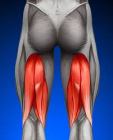 Hamstring injuries are very common injuries and healing them can be more difficult than you might think.
  Road biking demands that cyclists subject their low back to prolonged flexed posture, exagerated thoracic kyphosis, neck hyperextension, and close-packed hip/knee angles. Aero positions especially, have some risks associated with them. Two common injuries riders experience are to the hamstring and erector spinae muscle groups, in the form of low back pain.
  “ When dealing with endurance athletes, the truth may be hard to say and even harder to hear: All non-traumatic injuries are training-related. All ‘osis’ conditions are caused by overuse. If you didn’t fall off something or get hit by something, you did something wrong in training.” (Boyle, 2010).
 castlebodywork